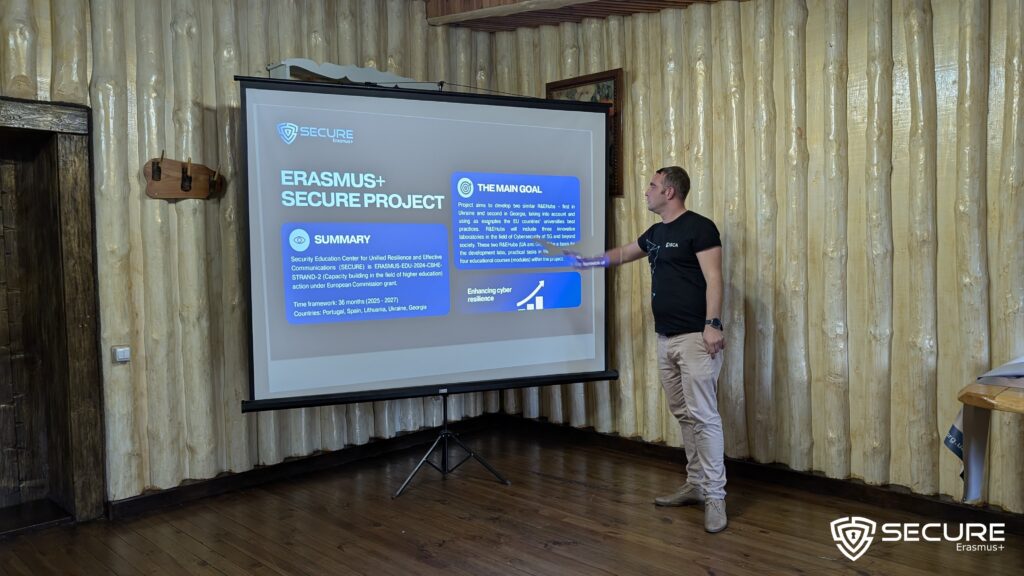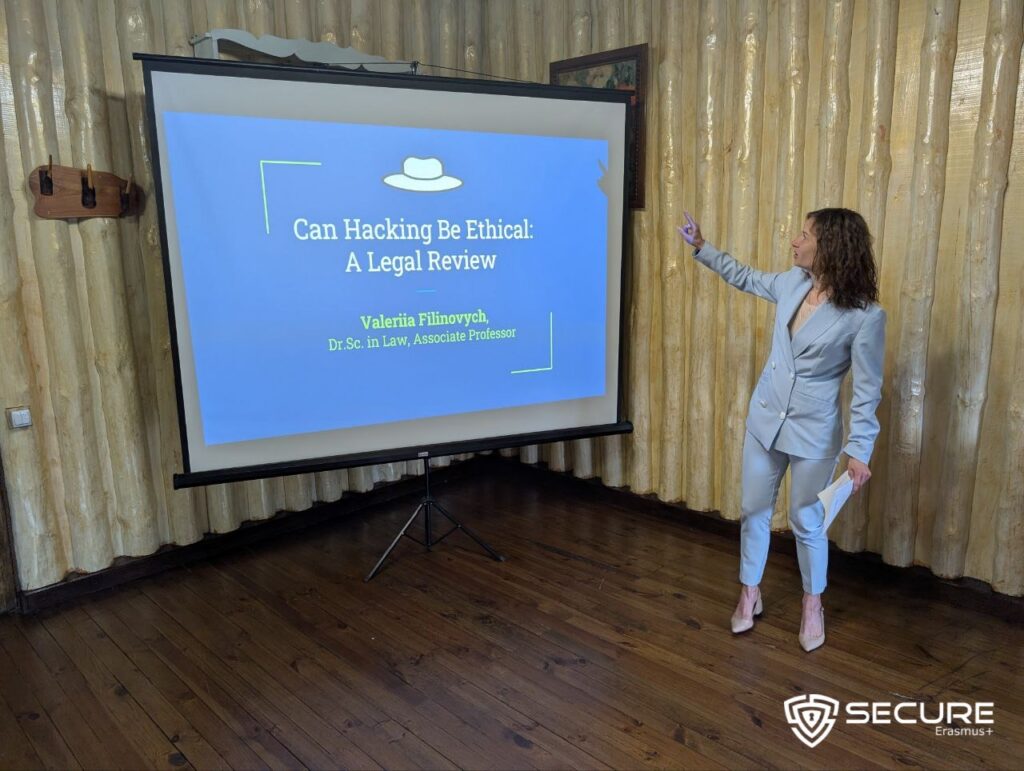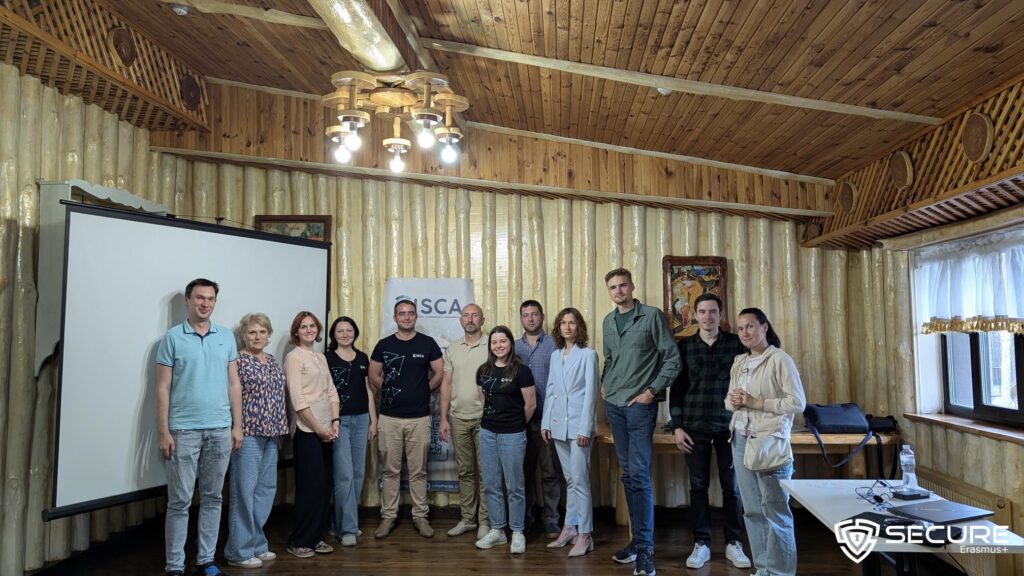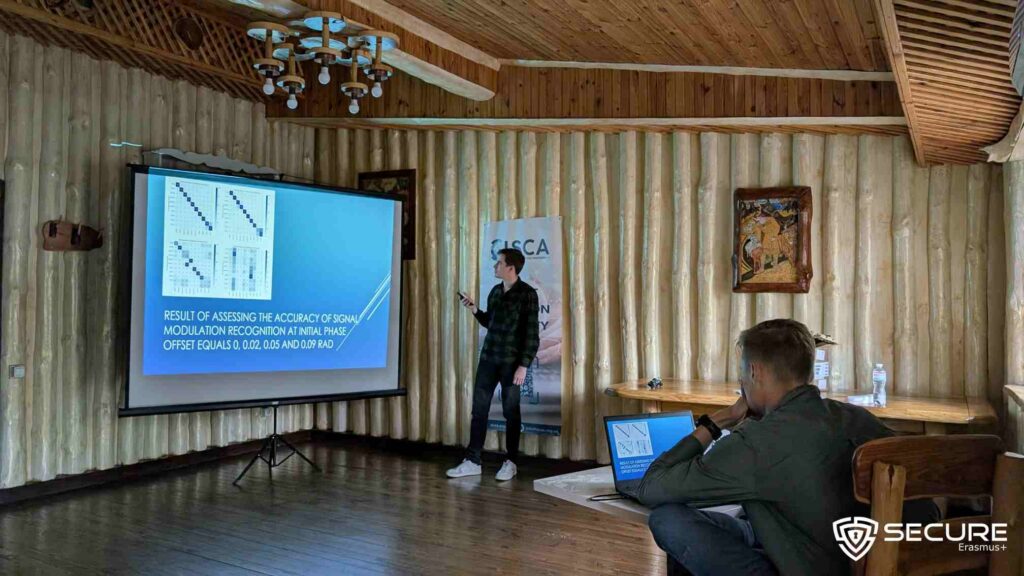
From January 26–29, 2026, partners of the Erasmus+ SECURE project gathered in Valladolid, Spain for a follow-up and training meeting focused on strengthening coordination, reviewing progress, and preparing the next steps of implementation across participating countries.
The meeting brought together representatives from partner institutions to ensure that key activities remain aligned with the project’s objectives—particularly those aimed at reinforcing cybersecurity capacity in Ukraine and Georgia through modern education, staff development, and collaborative infrastructure for “5G and beyond” society needs.
A working meeting with clear priorities
The agenda was designed around practical coordination: reviewing deliverables, clarifying responsibilities, and translating plans into a structured roadmap for the coming months. Partners used the sessions to synchronize timelines, address dependencies between tasks, and identify risks early—so that upcoming milestones can be achieved consistently across institutions.
Key focus areas and outcomes
1) Advancing the rollout of four innovative cybersecurity courses
A central part of the meeting was dedicated to course development and implementation planning. Partners continued alignment on course scope, delivery approaches, and next steps for the rollout of four modern topics that reflect today’s highest-priority cybersecurity challenges:
- 5G Security
- AI/ML Security
- Quantum Security
- DevSecOps
Beyond reviewing content, the discussions focused on making these courses deployable in real academic environments—ensuring clarity of learning outcomes, consistency across partner universities, and readiness for the next phase of delivery.
2) Building the Innovative Education & Research Hub for “5G and beyond”
Another major track was devoted to the Innovative Educational and Research Hub, designed to help develop a cybersecurity workforce prepared for emerging network technologies.
Partners worked through a structured roadmap for establishing and launching the Hub—covering organizational setup, implementation sequencing, and operational priorities. Dedicated discussions were held to address country-specific requirements and implementation planning in Ukraine and Georgia, ensuring that the Hub’s structure supports local capacity-building while remaining interoperable across the consortium.
3) Teacher training and professional development: from planning to execution
The meeting also reinforced the staff-development dimension of the project. Partners reviewed current progress and agreed on a structured approach to upcoming professional development activities, focusing on:
- clear responsibilities and ownership of tasks
- dependencies and coordination points across partners
- timeline, milestones, and expected outputs
- risk management and mitigation strategies
- mobility- and training-related planning where relevant
This workstream is crucial for ensuring that new course content and Hub-related activities can be implemented sustainably, with trained academic and administrative teams.
4) Increasing visibility and long-term impact
A separate set of discussions focused on impact and dissemination, emphasizing how project results are communicated, adopted, and scaled beyond the consortium.
Partners aligned on practical dissemination priorities—ensuring that outcomes are visible, useful for external stakeholders, and positioned for long-term adoption in academia and industry. The aim is not only to deliver project outputs, but to ensure they translate into durable improvements in cybersecurity education and capability.
Training track: Quantum & Post-Quantum Security
A distinctive element of the Valladolid meeting was the dedicated training track covering:
- quantum computing fundamentals
- quantum cybersecurity
- post-quantum security approaches
- practical research and development perspectives related to quantum coding and quantum labs
This component strengthened the consortium’s shared understanding of rapidly emerging risks and technological shifts, reinforcing the forward-looking nature of the SECURE project.
What’s next
The follow-up and training meeting concluded with a consolidated view of upcoming priorities and next steps. The consortium is moving from alignment into delivery—focusing on measurable progress across course rollout, Hub establishment, staff development, and impact activities.
As the project advances, partners will continue coordinating implementation to ensure that SECURE contributes real value to cybersecurity capacity-building—particularly in contexts where resilience and secure communications are increasingly essential.