On May 13, an online workshop on 5G Security was successfully held as part of the SECURE Erasmus+ project. The event brought together participants interested in modern approaches to teaching, research, and the practical implementation of cybersecurity methods for next-generation telecommunication networks.
The workshop focused on how 5G security can be effectively taught through a combination of theoretical knowledge, hands-on laboratory work, real equipment, software tools, and controlled test environments. Particular attention was paid to the importance of practical training, as modern telecommunications security requires not only an understanding of standards and architectures but also the ability to analyze traffic, detect anomalies, simulate attacks, and respond to incidents under realistic conditions.
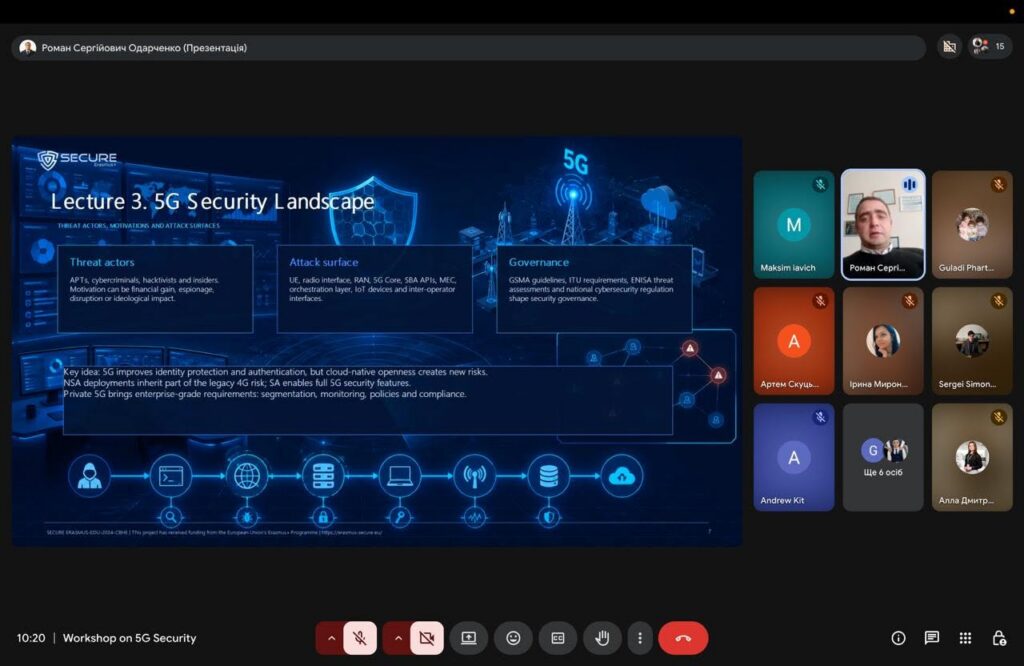
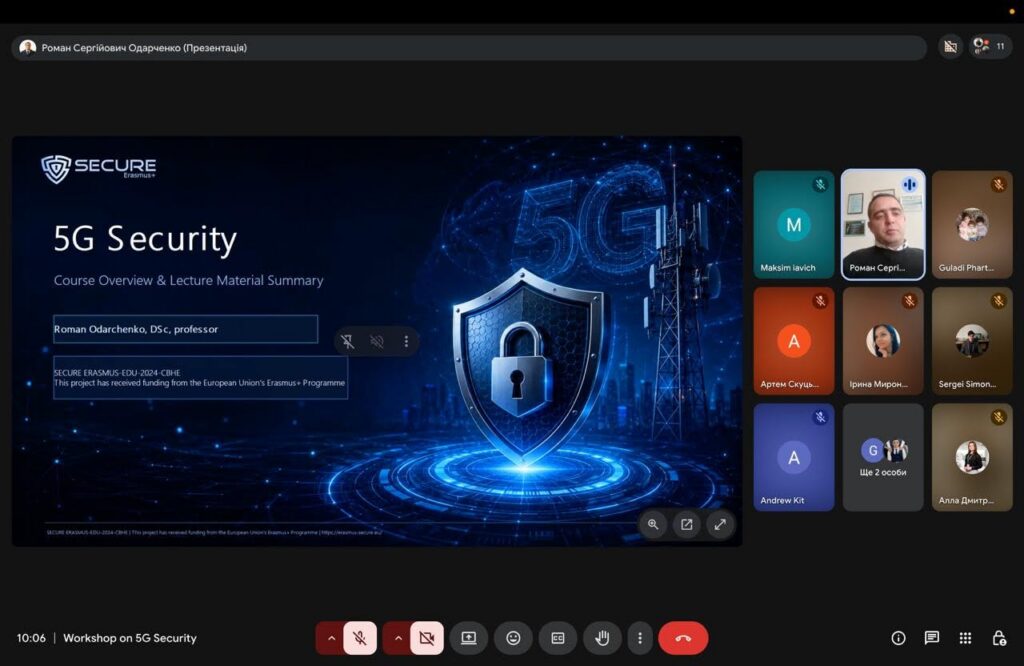
During the workshop, Roman Odarchenko and Alla Pinchuk from the National University “Kyiv Aviation Institute” presented the structure and content of the 5G Security course, highlighting its key topics, practical components, and expected learning outcomes. The speakers discussed how students can gain applied skills in securing 5G networks by working with 5G Core components, radio access technologies, network monitoring tools, intrusion detection and prevention systems, SIEM platforms, and penetration testing approaches.
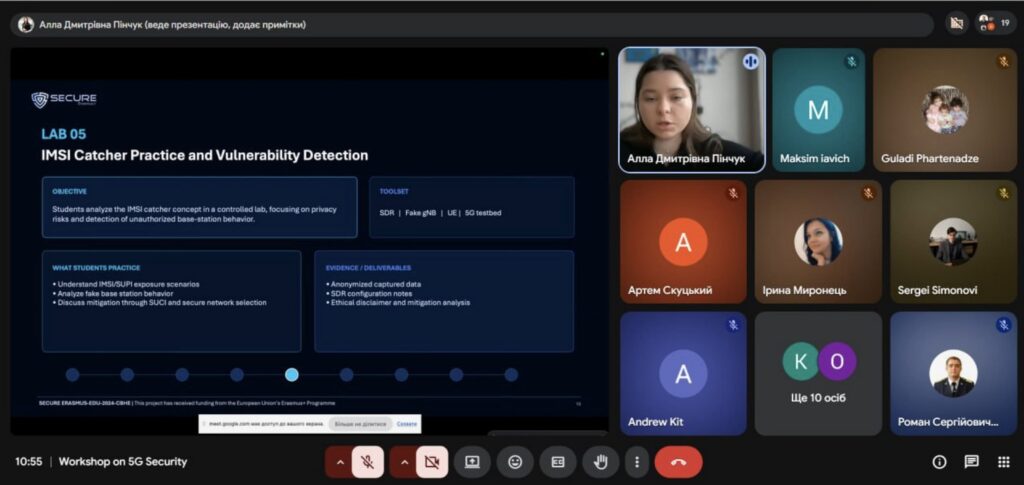
A significant part of the workshop was dedicated to hands-on laboratory activities. The presented training approach includes work with 5G emulation environments, SDR-based experiments, traffic capture and analysis, security monitoring, attack simulation, vulnerability assessment, and incident response scenarios. Such practical tasks allow students to better understand the security challenges of 5G networks, from the core network and service-based architecture to radio access, edge components, and operational monitoring.
The speakers also presented the equipment and software tools used for practical 5G security training, as well as approaches to building a realistic 5G security laboratory environment. The workshop emphasized that controlled testbeds and laboratory infrastructure are essential for developing cybersecurity competencies in telecommunications, as they provide a safe environment for experimenting, testing, and validating security methods.
The event demonstrated the relevance of integrating practical cybersecurity training into modern engineering education. As 5G networks become increasingly important for critical infrastructure, industry, smart cities, IoT systems, and future 6G development, the ability to understand, assess, and protect telecommunication systems becomes a key competence for future specialists.
The workshop highlighted the importance of collaboration between universities, international projects, researchers, and practitioners in developing high-quality educational programs in 5G and cybersecurity. The SECURE Erasmus+ project creates valuable opportunities for sharing experience, improving educational content, and strengthening practical training in the field of secure digital and telecommunication technologies.
We sincerely thank all participants who joined the workshop and contributed to the discussion.